Monday, 25 August, 2008
Armenia Hit By Fuel Shortages
By Shakeh Avoyan
Armenia was grappling with its worst fuel shortages since the early
1990s on Monday despite the reported reopening of Georgia's east-west
railway that serves as the main supply line of the two South Caucasus
states.
A section of that railway close to the central Georgian town of Gori was
damaged by a weekend fuel train explosion which Georgian officials said
was caused by a landmine. It occurred just over a week after another,
powerful explosion downed a nearby rail bridge. Russia denied Georgian
accusations that it was behind the attack.
The August 16 blast left the Armenian government scrambling to restore
supplies of wheat, fuel and other basic commodities from the Georgian
Black Sea ports of Poti and Batumi which process more than 90 percent of
Armenia's external cargo turnover. The government sent a convoy of about
40 fuel trucks to collect gasoline stranded in the ports.
Officials said on Monday that the convoy returned to Armenia at the
weekend with more than 500 tons of petrol. The government does not plan
to send more heavy vehicles to Georgia in view of the renewed rail
communication, they said.
Meanwhile, the situation with fuel supplies only deteriorated, with the
vast majority of filling stations in Yerevan resorting to severe fuel
rationing on Sunday. They stopped selling petrol altogether the next
morning. Only holders of prepaid corporate vouchers issued by the
country's largest station chains could buy a limited amount of petrol on
Monday.
`We have run out of gas and are selling it only to company cars. This is
all the information I have at this point,' said a worker at one filling
station besieged by angry motorists.
`The war is in Georgia, but it's Armenia that is in crisis,' one of them
complained. `They keep saying that petrol is coming and there are no
problems. But there is a problem.'
`Even in the most remote Georgian village there is no petrol shortage,'
said another driver. `Why? Because there are many petrol importers in
Georgia but only three of them in this country.'
The cargo company Apaven, which was assigned by the government to
organize the emergency fuel imports, downplayed the crisis. `The
[Georgian] railway has begun functioning at a fraction of its capacity,'
Apaven's executive director, Gagik Aghajanian, told RFE/RL. `But even
that is enough. If there is any deficit, I think it will be eliminated
shortly.'
Aghajanian referred to the start of rail traffic through a smaller,
disused rail bridge which Georgia, helped by Armenia and Azerbaijan, has
prepared for use until the damaged bridge is repaired.
According to the Armenian Ministry of Transport and Communications, the
August 16 blast left a total of 178 rail cars, 108 of them loaded with
wheat, stranded on Georgian railway sections west of Gori. `In all
likelihood, 35 cars loaded with wheat will head to Armenia today,' a
ministry spokeswoman, Susanna Tonoyan, told RFE/RL.
`Besides, we have a lot of freight in the ports of Poti and Batumi
awaiting shipment,' she said. `In particular, in Poti there are two
ships carrying 6,700 tons of wheat and 93 rails cars of other goods. In
Batumi, we have 2,500 tons of wheat, ten cars of petrol and another one
thousand tons of petrol.'
Tonoyan added that the government has also organized `intensive' fuel
and wheat supplies from neighboring Iran. More than 400 tons of flour
have already bee imported to Armenia through Iranian territory, she
said.
SHORTAGES OF FUEL AND WHEAT IN ARMENIA
By M. Alkhazashvili
The Messenger
Aug 26 2008
Georgia
Russia's intervention in Georgia and its deliberate damaging of
Georgia's transport infrastructure have caused serious problems to
Russia's strategic partner Armenia. That country receives many of its
essential goods by cargo through Georgia. The suspension of transit
caused by damage to Georgia's transport infrastructure has created
a shortage of certain products in Armenia, most importantly fuel
and wheat.
To try and alleviate the fuel shortage the Armenian Energy Minister
has traveled to Iran, although agreeing to obtain fuel from there
would be a difficult step to take as it would be more expensive than
getting it through Georgia.
There are currently 37 petrol tankers in Batumi which could be used to
transport fuel to Armenia. The Batumi terminal however is storing 1,800
tonnes of petrol which is due for delivery to that country. Armenia
is therefore sending 40 extra petrol tankers to Batumi. One of six
carriages of wheat intended for Armenia is also stranded in Georgia
due to Russia's damage of the railways.
Both Armenia and Azerbaijan are vitally interested in the prompt
restoration of the Georgian railway system. Specialists from both
countries are assisting Georgia to reconstruct it.
THE CAUCASUS MOMENT
By Vartan Oskanian
AZG Armenian Daily
26/08/2008
YEREVAN, Armenia. Although we could see the clouds gathering, the
recent Georgia-Russia confrontation shook us all. No one had allowed
themselves to believe that mixed messages and complicated agendas
would come to such a head, causing so much devastation, loss of life
and geopolitical chaos.
The South Ossetia conflict should not be viewed solely through the
larger prism of Georgia-Russia relations. This is an ethnic conflict,
after all, and one of several in the Caucasus. It is a warning to
the international community: If pipeline safety is a concern now,
then imagine the very real dangers that an Azerbaijani-Armenian
conflict over Nagorno Karabakh would create.
Therefore, in order to seriously tackle the more difficult conflicts
throughout this region, the comparatively more straightforward security
and stability issues must be resolved first - and quickly.
Conflicts in the region would be viewed in a wholly different, more
reassuring and tolerant context if there were a binding and strong
security pact that assured non-use of force.
These conflicts are not frozen. In the absence of a security pact,
there is an arms build up that is in itself destabilizing, distorting
national budgets and hampering the normal development of civil society.
Yet in the Caucasus, our countries and peoples have lived under a
common umbrella far more than we have been divided. Today, we share
a common vision of European integration, a vision that is greater
and more enduring than issues that divide us. It is in the broader
context of European integration that our issues should be resolved.
Although integration with Europe is not controversial, NATO expansion
is. Never in history has a grand coalition formed to defeat a
particular enemy survived after the task was completed. Not after
the Napoleonic wars, not after World War I and not after World War II.
After the West's Cold War victory, two things happened. NATO tried
to reinvent itself by directing its attention and resources to other
regions and addressing other problems. Containing Russia was not a
declared intention. And NATO created the Euro Atlantic Partnership
Council, which invited all Eastern Bloc and former Soviet republics
to participate.
This was visionary and potentially sustainable. After all, the
Organization for Security and Cooperation in Europe and the Council
of Europe extended their efficacy in that way by including the
remnants of the USSR. Not only did they remain relevant and viable,
they contributed immeasurably to our own growth and development.
But NATO also planned to continue and even expand in the same form,
even after its stated goal had long been met. Given the changed
security environment and Russia's great security sensitivities,
this was, it appears, a strategic mistake.
Georgia's eagerness to get into NATO is understandable. But the
security benefits to Georgia that NATO membership would bring would
be offset by the creation of a dividing line in the Caucasus, and
its attendant security challenges.
Perhaps this is the Caucasus moment: A historic opportunity, in the
context of a new regional security pact, for Brussels, Washington and
Moscow to meet with Tbilisi, Yerevan and Baku and create a nonaligned
Caucasus, free of security memberships and adversarial alliances. Such
positive, engaged, inclusive neutrality will be possible and beneficial
all around.
This would be in the best interest of this highly combustible region. A
U.S.-Russia confrontation at the Georgia-Russia level will make life
very difficult, not just for us here in Armenia but also for Azerbaijan
and Turkey.
It is in the context of these existential security issues that we
must view the recent Turkish proposal for a Caucasus Stability and
Cooperation Platform.
The idea of such a pact was floated already in 1999. The concept
found favor because there were fresh memories of the use of
force in our region, and the urgency of security arrangements was
evident. Opposition to Russian interests was not yet deep and there
were no tensions through proxies. But even during such a honeymoon,
the idea didn't become reality.
Today, force has been used again, and perhaps for that reason, the
idea has resurfaced. But today, with the threat of a renewed Cold-War
mentality, divisive lines may be drawn through these mountains and
all regional relations will become unimaginably complicated. That is,
where there still are relations.
Turkey's proposal is therefore interesting and the urgency is not lost
on anyone. But the concept must be developed right and implemented
well. But we've been down this road before in this part of the world,
where good intentions were sidetracked by the very political problems
they were meant to resolve.
The Black Sea Economic Cooperation pact, for example, was created
precisely for the purpose of bringing together those who otherwise
shared no common forum for economic cooperation and the resolution
of problems. But it's effectiveness has been limited because Turkey
lacked the commitment to use the forum as a way to relate with a
country like Armenia, with whom its borders are closed.
The proposal today, in this new tense environment, must be more
serious and sustained. It must marginalize no one. Security issues
are intertwined, and they ought to be addressed in a stability pact
with a comprehensive, strong security component.
During his visit to Baku last week, Turkish Prime Minister Recep
Tayyip Erdogan discussed the Turkish plan and publicly made reference
to Armenia's inclusion. It is also a fortuitous coincidence that
President Abdullah Gul of Turkey has been invited by President
Serzh Sargsian of Armenia to watch the Turkey-Armenia FIFA World Cup
qualifying match on Sept. 6 together.
This offers an opportunity for these two neighbors to discuss common
security challenges and pave the way for a region of peace.
Vartan Oskanian was foreign minister of Armenia from 1998 to April
2008. He is the founder of the Civilitas Foundation in Yerevan,
which addresses foreign policy, democracy and development issues in
the Caucasus.
ARMENIA BANS OPERATION OF WESTERN UNION ON ITS TERRITORY
Today.Az
Aug 25 2008
Azerbaijan
The Board of the Central Bank (CB) of Armenia decided today to
forbid all the banks on the territory of Armenia to participate in
the international Western Union money transfer system.
As Mediamax was told in CB press service, the banks were ordered to
annul the cooperation agreements with Western Union in an envisaged
order.
The CB press service informed that this decision was made to reduce the
banking risks as "there are cases of unfounded violation of agreement
provisions between Western Union and several banks acting on the
territory of Armenia. Thus, in branches of several banks the money
transfer system stopped service which can harm the usual activity of
the banks, their financial status, lead to an unexpected situation
in the sphere of money transfers, as well as influence the economic,
financial and real sectors of the country."
Mediamax recalls that earlier Azerbaijan demanded that Western
Union, Moneygram and some other systems stopped their activity in the
"Nagorno-Karabakh Republic" (NKR) threatening to ban the activity of
the systems in Azerbaijan. As a result of this, several money transfer
systems stopped their activity in "NKR".
~~~~~~~~~~~~~~~~~~~~~~~~~~~~~~~~~~~~~~~~~~~~~~~~~~~~~~~~~~~~~~~~~~~~












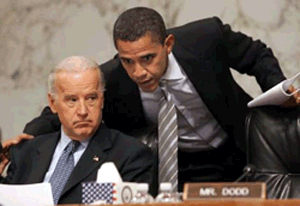
 Obama/Biden Strong on Genocide Recognition; US-Armenia Relations
 LA Fundraiser to Honor Armenian Caucus Co-Chair Rep. Joe Knollenberg

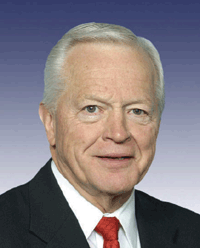 LOS ANGELES--Congressman Joe Knollenberg (R-MI), Co-Chair of the Congressional Armenian Caucus and a staunch supporter of issues of importance to Armenian Americans, will be honored on August 28, at a reception co-hosted by the Armenian National Committee Political Action Committee (ANC-PAC), the U.S.-Armenia Public Affairs Committee (USAPAC) and The California Courier newspaper. Also in attendance will be members of the National Organization of Republican Armenians (NORA.